Wednesday, December 17, 2014

3 Way To Maximize Your Orthodontic Treatment

Orthodontics is a big investment both in terms of time and money. Whether you are wearing braces currently, or you will begin orthodontic treatment soon, it's important that you get the most out of your investment. Our Las Vegas and Summerlin, NV orthodontist, Dr. Mark Truman and his team want all our patients to get the best, most efficient treatment experience possible.

With 2014 quickly coming to an end, many of us will be making New Year's resolutions to create some beneficial improvements in our lives for the new year. If you are planning on making a few resolutions for 2015, here are three things you may wish to include that will help you maximize your orthodontic treatment. Even if you're not the type to make resolutions for the new year, these tips will help you get the most out of your orthodontic care.

1. Practice Good Oral Hygiene

It is always important to brush and floss your teeth to keep your smile healthy. Good oral hygiene is even more important when you're wearing braces. Practicing healthy oral care is key to avoiding common dental problems like tooth decay and gum disease. As oral hygiene can be more challenging with braces, people wearing them need to be even more diligent. 


Fortunately, practicing good oral hygiene becomes easier when you use products designed to help you do the best job you can when caring for your teeth. First and foremost, we recommend using an interdental toothbrush, such as Proxabrush, that's specially designed to clean underneath and around your wires and brackets. Another great product for those with braces is Peroxyl, a hydrogen peroxide antiseptic mouth rinse that reduces inflammation to the gums and cheeks and helps to decrease irritation that may develop from your braces.

We understand that flossing takes time and requires patience when wearing braces. However, flossing isn't a chore when you use a special floss threader designed to easily get in and around all those nooks and crannies where food particles and bacteria hide under brackets and wires and along the gumline.

2. Wear Your Extra Appliances as Directed

In addition to maintaining good oral hygiene throughout orthodontic treatment, it's very important for orthodontic patients to wear their extra appliances as directed, including rubber bands (elastics), spacers, turn key palatal expanders, and headgear. The key to success with your treatment depends upon you following the directions we give you. Neglecting to wear your appliances as directed can result in costlier treatment and longer treatment times. Our team will provide you with very detailed instructions regarding how and when to wear your appliances. If you have any questions about your rubber bands, palatal expander, spacers, or headgear, do not hesitate to give our Las Vegas orthodontic office a call.

3. Wear Your Retainer as Directed 

Once your braces are removed, you will enter the final phase of your orthodontic treatment called the retention phase. This is when you'll need to wear a retainer that holds your teeth in their new positions. If you fail to wear your retainer as directed, your teeth may shift back into their original positions, discounting the time and money you put into your treatment. Remember to remove your retainer before brushing and flossing your teeth and to brush and rinse your retainer before putting it back in your mouth.

Learn More About Getting The Most Out of Your Investment

We want all of our patients to get the most out of their orthodontic treatment. If you have any questions regarding your treatment, give us a call at (702) 360-9000 to learn more. Orthodontics is a two-way street, meaning it requires effort from both you and your orthodontist. By following the instructions we provide you with, you should sail through orthodontic treatment without any problems – resulting in a beautiful, straight smile you can enjoy for the rest of your life! 


Wednesday, November 19, 2014

Braces-Friendly Holiday Recipes

With the holiday season quickly approaching, there are friends to see, parties to attend, and lots of food to eat. With the abundance of treats to enjoy at this time of year, it can be difficult for those with braces to find yummy foods and snacks that will not cause damage to their wires and brackets. Luckily, there are some braces-friendly holiday recipes out there that can be an easy crowd-pleaser for everyone at the party, braces or not. Our Las Vegas orthodontist, Dr. Mark Truman, and our staff put together a few tasty holiday dishes that are soft, and easy to eat.


Creamy Garlic Mashed Potatoes

Mashed potatoes are a staple holiday delight that is present at almost every winter dinner party. The best thing about these garlic mashed potatoes is that their creamy consistency gives them a soft, smooth, melt-in-your-mouth texture, making them the perfect side dish for people with braces. Enjoy them with your holiday turkey or as a simple snack.


Ingredients:


  • 3 ½ pounds russet potatoes
  • 16 fluid ounces half-and-half 
  • 2 tablespoons kosher salt 
  • 6 ounces grated Parmesan cheese
  • 6 cloves garlic, crushed


Directions:


  1. Peel and dice the potatoes, making sure to chop them into relatively similar-sized chunks.
  2. Place the diced potatoes in a large saucepan, add the salt, and cover with water.
  3. Bring the potatoes to a boil over medium-high heat and then reduce heat to maintain a rolling boil until the potatoes fall apart when poked with a fork.
  4. In a medium sauce pan, heat the half-and-half and the garlic over medium-heat until it’s simmering. Remove the mixture from the heat and set aside.
  5. Once potatoes are finished cooking and have been drained of water, mash them together with the garlic-cream mixture and Parmesan. 
  6. Let it stand for 5 minutes so that the mixture thickens and then serve.


Apple Spice Muffins

Craving something sweet but all you can find is sticky, chewy toffee? Have no fear because these sweet, crumbly apple spice muffins will satisfy your sweet tooth without impairing your orthodontic progress. Enjoy!


You’ll Need:


  • ½ cup unsalted butter, at room temperature
  • ¼ cup dark brown sugar, packed
  • ½ cup granulated sugar
  • 1 large egg
  • 1 cup plain low-fat yogurt (not Greek yogurt)
  • 1 cup all purpose flour, spooned into a measuring cup and leveled 
  • 1 cup whole wheat flour, spooned into a measuring cup and leveled
  • 1 teaspoon baking soda
  • 1 teaspoon baking powder
  • ¼ teaspoon salt
  • ½ teaspoon ground nutmeg 
  • 1 tablespoon ground cinnamon
  • ¼ teaspoon ground cloves
  • 2 cups peeled, cored, and finely chopped baking apples
  • 6 tablespoons dark brown sugar, packed (for topping)


Instructions:


  1. Preheat the oven to 375 degrees Fahrenheit. Grease a 12-cup muffin pan with non-stick cooking spray or butter.
  2. In an electric mixer, beat together the butter, granulated sugar, and brown sugar until fluffy, approximately 1-2 minutes.
  3. Add the large egg and mix well, stop to scrape the bowl if necessary.
  4. Once mixed, add in the yogurt. Note: the batter will look grainy.
  5. Add in the flours, baking soda, baking powder, cinnamon, salt, cloves, and nutmeg and beat on low speed until just combined.
  6. Mix in the chopped apples until just combined. Do not over-mix.
  7. Using an ice-cream scooper or large spoon, dive the batter evenly among prepared muffin cups until each cup is full. Sprinkle the brown sugar topping evenly over the tops of the batter.
  8. Bake the muffins for 25 to 30 minutes. Insert a toothpick into the muffins to determine if they are ready. If the toothpick does not come out clean, continue baking.
  9. After removing the muffins from the oven, let them cool for 5 minutes in the pan, and then turn them out onto a rack to finish cooling completely.
  10. Serve warm. 


Contact Our Las Vegas Orthodontic Office

At Truman Orthodontics, our Las Vegas, NV team specializes in orthodontics for all ages, including metal braces, ceramic braces, palatal expanders, and more. If you have any questions about what and what not to eat with braces, contact our office today. To schedule an appointment with us, please fill out our online form or give us a call at (702) 360-9000. We wish you and your family a happy and healthy holiday season!


Wednesday, June 12, 2013

Dr. Truman would love to go adventuring but he can't leave his patients. Take Dr. Truman with you on your summer adventures. Snap a picture of you with "mini Dr. Truman" and be entered in a drawing. Stop by our office for details and your "mini Dr. Truman" prop.


Wednesday, February 27, 2013

Bad Breath-Good Advice


If you've ever suffered from bad breath, you know how problematic it can be. There really are few things worse than dealing with bad breath. Not only is this unpleasant to have a bad taste in your mouth, it can make talking to other people and having a normal conversation difficult. Whether the cause is from your diet or morning breath, there are ways to get rid of bad breath and keep your mouth feeling fresh.
What Causes Bad Breath? 

Bad breath doesn't have one main reason, but can be caused by several lifestyle factors. One of the most common causes is eating foods that cause bad breath such as onions or garlic. While these foods are great for your health, they have a strong odor and eating even a small amount can cause bad breath for the rest of the day. 

Another common cause of bad breath is not eating enough. Although we usually think of food as causing bad breath, you can produce it yourself as well. When you have gone for a few hours without eating anything, your mouth will start to produce more saliva, which can have a naturally bad smell. 


How to Prevent Bad Breath

The good news is, preventing bad breath is pretty easy. By using these tips and suggestions throughout the day, you can help to keep your breath as fresh as possible.  

Eat every four hours: You don't have to eat a huge meal, but even a small snack can be a great way to prevent bad breath. Your breath will get worse the longer you go without eating. Eating more frequently encourages the production of fresh saliva, improving your breath naturally. 

Use mouthwash or mouth spray sparingly: Mouthwash is one of the best inventions for bad breath, but you can actually overdo it. Many brands of mouthwash have alcohol which actually dries out your mouth and can make your breath worse. If you use mouthwash, do so sparingly. 

Drink water constantly: Water is a great cure-all for a variety of conditions, especially for bad breath. Water keeps your mouth from drying out and helps to keep you hydrated as well. Carry a water bottle with you throughout the day and drink periodically to help freshen your breath.

Wash your mouth with water: Mouthwash is a great idea, but washing your mouth out with water works well also. If you rinse your mouth with water after meals, you'll get rid of excess food particles and bacteria which can contribute to bad breath.

Brush your tongue in the morning: In the morning your mouth is generally the dirtiest, especially your tongue. While you probably brush your teeth in the morning, you may be missing your tongue entirely. Brush it gently to remove the bacteria-covered film that builds up overnight.

These tips can help to improve the health of your mouth and significantly decrease any bad breath issues. If you put these suggestions to use every day, you'll soon start to notice fresher breath and chances are your friends and colleagues will also. 

Wednesday, January 30, 2013

Overbite Correction Using a Functional Appliance


In a growing patient with a significant overbite caused by a short lower jaw, a functional appliance can be used.  The appliance holds the lower jaw forward for 10-12 months until the teeth and jaws have adapted to the new, correct position.  Braces are worn in conjunction with the functional appliance and continue to be worn after the appliance is removed to finalize bite correction and tooth alignment.  This patient was treated for a total of  2 years and 5 months.

 
Before

 
After
 
 
Profile photographs below show improved facial balance resulting from functional appliance treatment and braces.  The Lower jaw is moved forward to correct the bite. 
 
Before

 
After
 
 
In the intra-oral photographs below, you can see that before treatment, the lower jaw is back.  The upper front teeth are flared forward and there is a space between the top teeth.  After treatment, the lower jaw has come forward and upper teeth angulations and spacing is corrected
 
Before
 
After
 
Before
 
After
 
 
Before
 
After


The X-rays show the relative position of the jaws and teeth before and after treatment.

Before
 
After


Cases such as this demonstrate why it is so critical to have children evaluated by an orthodontist at a fairly early age.  If this patient were not treated in her youth while she was still growing, this type of result could not be achieved.  Adults with this type of malocclusion require jaw surgery to reset the bones in order achieve similar results.  


Friday, January 11, 2013

How To Take Care of Braces


There are a number of reasons why someone might need braces on their teeth, despite the stigma that once came with having them. From crooked, gapped or crowded teeth, to overbites and underbites, the idea is to wear them for as long as is necessary to fix the condition and not a moment longer. As expensive and inconvenient as these devices can be, the best way to avoid wearing them any longer or having to get them repaired is to take proper care of them from the start. This can be accomplished with a few good oral hygiene habits and a touch of common sense.

1.) Brush carefully

If you ever took brushing for granted in the past, you'll need to develop some more consistent and meticulous brushing habits. Brushing after every single meal is one of the best ways to avoid trapping food particles and bacteria that might cause cavities. It might hurt a bit at first to brush, but this should go away after the first week. Keep in mind that there are special toothbrushes designed specifically for this purpose, allowing you to get into those hard-to-reach places.

2.) Floss regularly

Although flossing might seem incredibly difficult with braces, it's actually more important than ever before, since there are that many more places where food can get caught. Ask your dentist or orthodontist about flossing techniques to help you get behind the main arch wire and up to the gum area. There are also special flossers available to make this easier.

3.) Stay away from certain foods

Your orthodontist will give you a list of foods to stay away from that you should pay special attention to. This is likely to include hard, sticky, chewy and crunchy foods. Hard foods like nuts and hard candies can actually damage the wires and most of the others on the list can get easily stuck in places that are hard to reach. In addition, it is often recommended that you stick to soft foods for the first few days, avoiding tough meats, raw vegetables and hard bread.

4.) Wear a mouthguard when necessary

This applies primarily to athletes who participate in contact sports where there might be a chance of getting hit in the mouth. Wrestling, martial arts and football are a few examples of activities where there's a greater chance of either damaging your orthodontics, or possibly even causing injury to the soft tissues of the mouth.

5.) Don't miss any dental appointments

Your orthodontist will expect to see you regularly, to check your progress. Treatment time varies from one patient to another and these follow-up appointments are necessary to make any adjustments and further recommendations, based on how well your particular treatment is progressing. If there is any damage to your braces, this is the time to get it fixed. Most orthodontists will take care of any normal or common repairs, but don't expect them to cover damage due to neglect or missing appointments. Remember not to miss any non-orthodontic dental appointments, either.

The length of time you have to wear your braces can range from a few months to a couple years, or more. Until it's time for them to come off, it's important that you take better care of your teeth than you ever have in the past and treat your orthodontics with the very same care, as though they were a part of your own mouth. Think of them as an investment not only in financial terms, but also in terms of what they will do for your appearance in the years to come. 

Monday, December 31, 2012


Ten New Year’s Resolutions To Improve The Brain

In order to stay healthy and vital, the mind needs regular attention like all parts of the body. Follow these suggested resolutions for improved brain function.


Improve Your Diet

The brain thrives on a healthy diet. Incorporate an abundance of fresh fruits and vegetables into your daily meals to ensure your brain receives the nutrients it requires to function at its best.

Eat Less Sugar

Sugar contributes significantly to the condition we refer to as “brain fog.” Avoid high carbohydrate foods when you need your brain to function at its highest level.

Read Two Books A Month

Reading engages the brain in physical activity. Look up new words and memorize them. Read a mix of fiction and non-fiction titles for a blend of entertainment and education.

Keep A Journal Or Diary

Keeping a daily journal lets the brain know the things that are important to you. By writing them you are reinforcing their place of importance in the brain. These events will be easier to recall at a later time.

Write About Your Family

Record the fun and exciting events of family life in notebooks. From a baby’s first tooth to the six year old riding a bike with no training wheels, you will remember details better if you have written them down. Your children and grandchildren will appreciate the stories too.

Learn A Language

The world is as close as the Internet, and knowing a second or third language is a definite asset in both your business and personal pursuits. Learning a new language is an excellent brain exercise.

Quality Sleep

Get good quality sleep every night to enhance brain function. Quality sleep refreshes and recharges the brain for the next day’s challenges.

Take Walks

Walking is good exercise and improves circulation, which is critical for a healthy brain. A good walk “clears the brain” and strengthens the memory. Daily walking can help improve the memory of senior citizens.
 

Play Word And Number Games

Crossword puzzles, Scrabble, Sudoku, and other word and number puzzle games create mind-stimulating challenges for the brain. Playing “thinking” types of games on a consistent basis keeps the brain functioning at a healthy level.

Never Stop Learning

When the brain is called upon to learn new things, the challenge stimulates and improves overall brain function.

Making healthy New Year’s resolutions for your brain results in improved memory and increased brain function.   

Wednesday, November 28, 2012

Urban Legends of the Orthodontic World

Urban Legends of the Orthodontic World


There are a lot of urban legends and myths about orthodontists and their services. Some of these have become so commonplace that they are now inseparable from the actual facts. As an orthodontist, I feel it is my responsibility to educate both my patients and the public so that they can have a clear understanding of what I do and how I can help them. With that in mind, I’d like to take a few minutes to debunk some of the common orthodontic urban legends and myths.

Myth One: I don’t need an orthodontist because my general dentist can take care of the problem.

 While your general dentist is undoubtedly a talented and educated professional, when you have a dental issue that falls into the realm of orthodontics you should see a specialist (orthodontist). Why? Orthodontists receive more specialized formal education than a general dentist. Not only do orthodontists complete four years of dental school, they also receive 2-3 additional years of intensive clinical and didactic training. This greater knowledge base allows for more efficient treatment times with more consistent treatment results.

Myth Two: Only children or teens need to visit an orthodontist. 

Some people believe that braces are only for children or teens. They are often surprised to find that orthodontists treat adults on a regular basis. In fact, the number of adult patients is on the rise. According to the New York Times, between 1994 and 2010, the number of Americans over 18 getting either braces or some type of teeth-straightening treatment from an orthodontist went from 680,000 per year to 1.1. million per year (Newman, 2012). Adult patients now make up approximately 22% of orthodontic patients in the US. No matter your age, dental health and a dazzling smile can be achieved and often times, orthodontics is a key component in reaching that goal.

Myth Three: Braces are just for cosmetic purposes and aren’t necessary for my dental health.

While braces can definitely help you get that beautiful smile, they aren’t just for cosmetic improvement. Well aligned teeth can facilitate good oral hygiene making it easier to prevent tooth decay and gum disease. In addition, resolving certiain orthodontic problms with the use of braces can improve your ability to speak, chew, and even breathe.

Myth Four: Getting braces is extremely painful. 

Adults and children alike often associate braces with pain. This may stem from a painful dental experience in the past. Fortunately, there is no pain involved in putting on braces or adjusting the wires. Only several hours after the proceduere do the teeth become sensitive to pressure. This pain is not a toothache. The teeth only hurt when they are biting into solid foods. If the teeth are apart, no pain is felt. This sensitivity to pressure gradually diminishes over the coure of 2-4 days. If you ever feel a sharp or stabbing pain that is persistent consult with your orthodontist to make sure there aren't any problems.

Myth Five: My braces will set off metal detectors (like those in airports) and cause me to be struck by lightning.

 No, none of the above. Braces can be made of a variety of materials; however, metal alloys are the most common material. Because the metal used is so light weight, they will not trigger any security systems in the airport or anywhere else. As for lightning, with or without braces your chances of gettting struck by lightning are the same. 1 out of 775,000 (Dr. Cooper, n.d.).

These are just a few of the urban legends and myths associated with orthodontics. If you have additional concerns or questions about orthodontics and orthodontists feel free to set up an initial consultation with me. I’ll be happy to provide you with all the information you are looking for.


Resources

Cooper, M. A. (n.d.). Medical Aspects of Lightning. Retrieved from http://www.lightningsafety.noaa.gov/medical.htm

Newman, A. A. (2012). Orthodontists Market to Adults Seeking Prettier Smiles. Retrieved from http://www.nytimes.com/2012/02/02/business/media/orthodontists-market-to-adults-seeking-prettier-smiles.html


Thursday, November 22, 2012

Celebrating the Holidays with Braces

Celebrating the Holidays with Braces


What foods to eat and what foods to avoid this holiday season

With Thanksgiving already here and December clearly in site, the holiday season is really getting underway. It’s an exciting time of the year because there’s so much to look forward to including time off from school and work, family gatherings, gift giving and receiving, decorations, and let’s not forget the food! The holiday season brings with it fabulous foods that you probably don’t get to indulge in the rest of the year. Unfortunately, a lot of these delicious, mouth watering dishes pose a real problem to individuals with braces. To help, I’ve created two lists to guide individuals with braces safely through any holiday feast.

The Naughty List
If you have braces beware of the foods I’ve placed on the naughty list this year. Indulging in these foods could result in damage to your braces including loose bands, broken wires, or detached brackets. Damage can be costly, painful, and prolong treatment time.

Here are some of the foods to avoid this holiday season:

Carmel Candy
Candy Canes
Hard Breads
Peanut Brittle
Pecan Pie
Popcorn (Kernels)
Cranberries and Cranberry Sauce - may stain clear ties.
Snack Mix - typically contains nuts and hard pretzels which should be avoided.
Vegetable Trays - raw, hard vegetables like carrots need to be cut up.
Hard Cookies - go for soft cookies or soak hard cookies in milk. Watch out for nuts!

In general, you should limit your intake of foods and beverages (such as soda) that contain high amounts of sugar. Sugar is eaten by the bacteria that live in the mouth; in turn, the bacteria excrete acids which lead to tooth decay and cavities.

The Nice List
This holiday season, try to pick foods that I’ve placed on the nice list whenever possible. Play it safe! I’m sure no one wants to be spending the day after Thanksgiving at the orthodontist’s office. Here are some foods to enjoy this holiday season:

Turkey
Ham
Cooked Vegetables
Soft Breads
Stuffing
Mashed Potatoes
Deviled Eggs
Pumpkin Pie
Sweet Potato Pie
Chocolate Pie

Enjoy your holiday season; spend it with your friends, family and colleagues - not your orthodontist! The best way to do that, if you wear braces, is to follow the naughty and nice lists I’ve created. If you see a dish on your dinning room table that isn’t on my lists the best way to evaluate it is to ask yourself these two questions:

  1. Is it sticky and/or chewy?
  2. Is it hard - if I bit into it, would it go crunch?

If the answer is yes to either of the above questions than avoid that food! Move on to other, friendlier dishes. I know this means giving up some of your favorite foods but in the long run, it’ll be worth it because you’re going to have a beautiful smile, and isn’t that one of the best holiday gifts you could give yourself?


Wednesday, August 29, 2012

Narrow Smile

This patient came to me because she did not like how narrow her smile looked.


Because the back teeth do not fill out the full width of the smiling lips and mouth, in most lighting there are shadows that cast in the sides of the mouth when she smiles leaving a darkness in the corners of the mouth.  In orthodontic language, these dark shadows are called "buccal corridors."


The narrowness of the upper portion of her upper jaw resulted also in a protrusion of the upper teeth.

This is the most dramatic view of the narrowness of her jaw. 
  
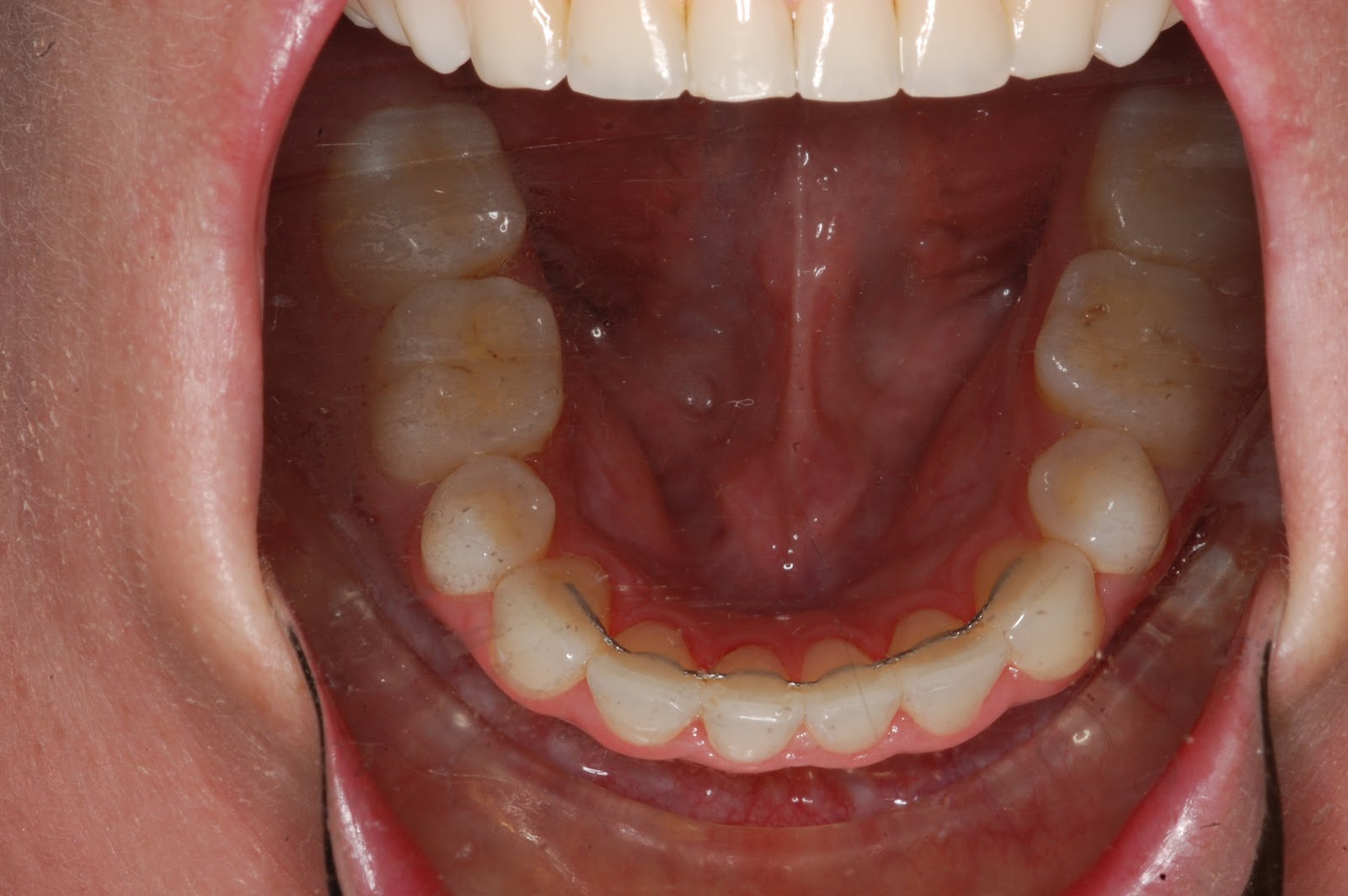
This is the same picture of her upper teeth after braces.  She elected to wear a permanent retainer which is what you see bonded to the back of her front teeth.

You can see the improvement in the width of the jaws.  I also manicured the edges of her incisors so they have the correct shape and contours.

The overbite was corrected.


You can see the dramatic improvement in her smile! 

Friday, August 17, 2012

Teenager With Dental Crowding and Overbite

This young lady came in to my office when she was almost 12 years old. She and her mother were concerned with the crowding of her teeth.
   
When she smiled it was evident that she had "crooked teeth."  This was a result of a crowding problem.  The teeth that had grown in were too large for the current size of her jaws. 

One common presentation of crowding seen here is that the front two teeth (central incisors) are more forward than the teeth adjacent to them (lateral incisors).  Also, the canine teeth or "eye teeth" are out too far toward the lips and cheeks. 


This patient also had an overbite.  This means that the top teeth are more anteriorly positioned in the face than the bottom teeth.  Also, there will often be a forward angulation to the top front teeth as you can see here particularly of the central incisors.  This forward angulation is often referred to in orthodontic terms as flaring or dental protrusion. 

This is a view of the crowding of the upper teeth looking up into the mouth.

The bottom teeth also had some crowding but it was mild compared with the upper teeth.

This is a cephalometric x-ray that shows the teeth from the side.  This image helps the orthodontist to see more clearly the angulation of the front teeth, the amount of overbite, as well as how the jaws are developing.  The field of orthodntics has developed hundreds of ways to analyze these x-rays to help understand current jaw positions, identify facial growth patterns, and evaluate tooth angulations.  Average, normative values have been suggested which can help the orthodontist to quantify the severity of the problems as they relate to treatment goals. 

This is the final x-ray after the overbite has been corrected.  You can see that the tongue-facing surfaces of the top front teeth are resting on the lip-facing surfaces of the bottom front teeth.  This is the correct position of the teeth.  

Her jaws were expanded to accommodate the crowded teeth leaving her with a beautiful, broad smile.

Tooth alignment has been achieved using braces.

Overbite correction has been achieved using orthodontic elastics.  Elastics work by moving groups of teeth.  Specifically in this case, the top teeth were pulled back and the bottom teeth were pulled forward.  The elastics are attached to certain braces that have "hooks" designed to hold the elastics in place.  Consistency with elastic wear is very important to the success of this type of treatment.  Optimal tooth movement occurs with 20 or more hours of elastic wear per day.  Since patients are able to put the elastics in and take them out by themselves, they must be committed to keeping them in.  Parental reminders don't hurt either :)  Usually, elastics are removed while eating and brushing and flossing.  Otherwise, they are worn full time.     

You can see the broadness of the dental arches which contributes to her beautiful smile.


Happy Mother and Daughter!!!

Friday, May 25, 2012

Orthognathic Surgery

     Not all bite problems are a result of improper tooth alignment. There are certain individuals who have bite problems because of misaligned jaws. In other words, the upper and lower teeth don’t fit together properly because the bony bases that support the teeth are not properly positioned relative to one another. In orthodontics, we call this type of problem a “skeletal dispcrepancy.” This simply means that the upper and lower jaws have not developed in harmony with each other. Typical presentations of these jaw problems include underbite, overbite, crossbite, or jaw asymmetry.

     People who have severe skeletal discrepancies also have poor facial balance which negatively affects their appearance. When severe, surgical correction of the jaw positions is necessary to achieve proper facial balance. This type of surgical procedure is called “orthognathic surgery.” In our day and age, all orthognathic surgery must be done in conjunction with orthodontic treatment. Orthodontics is a crucial part of the process because the teeth must fit together perfectly when the jaw bones are reset. Therefore, every patient that needs jaw surgery will also have at least some movement of the teeth prior to the surgery being performed. This allows for a proper bite at the time of surgery. In addition, the attachments on the braces and wires allow the oral surgeon to use miniature elastics to hold the jaws closed during healing. The patient can then recover without having the mouth wired closed.
    
     The patient below is a professional singer who is in the public eye every day.  She had braces as a child but was unhappy with the way that her teeth looked.  She came to my office for a consultation hoping to resolve her concerns by wearing braces.  In every case, and especially in a situation like this, it is very important as an orthodontist to really understand the chief concern that each patient would like addressed.  As I looked in her mouth, I did see that she had some bite problems but they were not severe.  If my goal was only to fix the bite, I could have done that easily with braces alone. 

As we talked, however, it became clear to me that she was more unhappy with the structure of her jaws and lower face than the position of her teeth. 


In this picture you can see that in order for her to close her lips together, she has to flex the muscle of her chin. If the lips do not come together comfortably when all of the facial muscles are relaxed, it requires the chin muscle or "mentalis" muscle to flex in order to get the lips closed.  This is called mentalis strain or lip strain.  It can result from two skeletal problems.  First, the height of the lower face is too large requiring the lips to "reach" further to keep the mouth close. Second, when the lower jaw is behind the upper jaw, the lower lip can get "trapped" below the upper teeth requiring the chin muscle to flex and force the lower lip forward and up to get the lips together. In her case, both of these problems were present causing significant mentalis strain on lip closure.   


You can see from this picture that when she smiles, she shows an excessive amount of gum tissue. In orthodontics this is known as a "gummy smile." It can be the result of a very mobile upper lip that lifts higher than normal but more commonly is it a result of the upper jaw being positioned too far below the nose and cheeks. That is the case with this patient and it is a problem with structure of the craniofacial bones, not the position of the teeth.


In the profile view, the retruded position of the mandible is apparent.  The mentalis strain mentioned above is also evident.  A more forward position of the lower jaw and chin would go a long way to achieving proper facial balance.


A view of the occlusion shows that the lower front teeth are positioned behind the upper front teeth.  In orthodontics, this is called overjet but "overbite" is the term used in the general populations.  If facial structure were not an issue, the bite could be corrected using braces alone.


These views show that the jaws were somewhat narrow along with mild irregularities in the positions of several teeth.


This x-ray is called a panoramic x-ray and it shows that the wisdom teeth have been extracted.  Also, four premolar or "bicuspid" teeth were removed prior to her first set of braces when she was a child.  The orthodontics used the spaces gained from those extractions to align the teeth.


This x-ray is called a cephalometric x-ray and is very useful to the orthodontist and the oral surgeon in determining the position of the jaws and in planning the jaw movements that need to be made.


You can see the facial changes that were made using combined orthodontic treatment and orthognathic surgery.  The lower facial height decreased allowing for more relaxed lip closure.


The jaws were expanded resulting in a broader smile.  The upper jaw was also lifted resulting in less gum display when smiling.


The lower jaw and chin projection increased dramatically taking away the lip strain that pre-surgically was needed to close her mouth.  This procedure was done without any implanted chin material so the results will last a lifetime.


After removal of the braces, the teeth are well aligned


The overbite is no longer present


The width of the jaws has increased as well


The oral surgeon uses many plates and screws during surgery that stabilize the jaws while they are healing.  This "hardware" does not need to be removed.


This is the final cephlometric x-ray after the braces have been removed. 

The braces are removed several months after the surgery once the bones are totally healed and the bite has completely stabilized. Successful treatment of severe skeletal deformities of the lower face requires a team approach and precise planning on the part of the orthodontist and the oral surgeon. Those who undergo this treatment experience possibly the most dramatic improvements in facial appearance that exist in medicine today. While surgery is an amazing tool to restore harmony in jaw relationships, some bites that appear to be far off can be corrected using orthodontic treatment alone….especially in young people. We can help you determine if orthognathic surgery is right for you.